To Kill a Mockingbird
Vibe
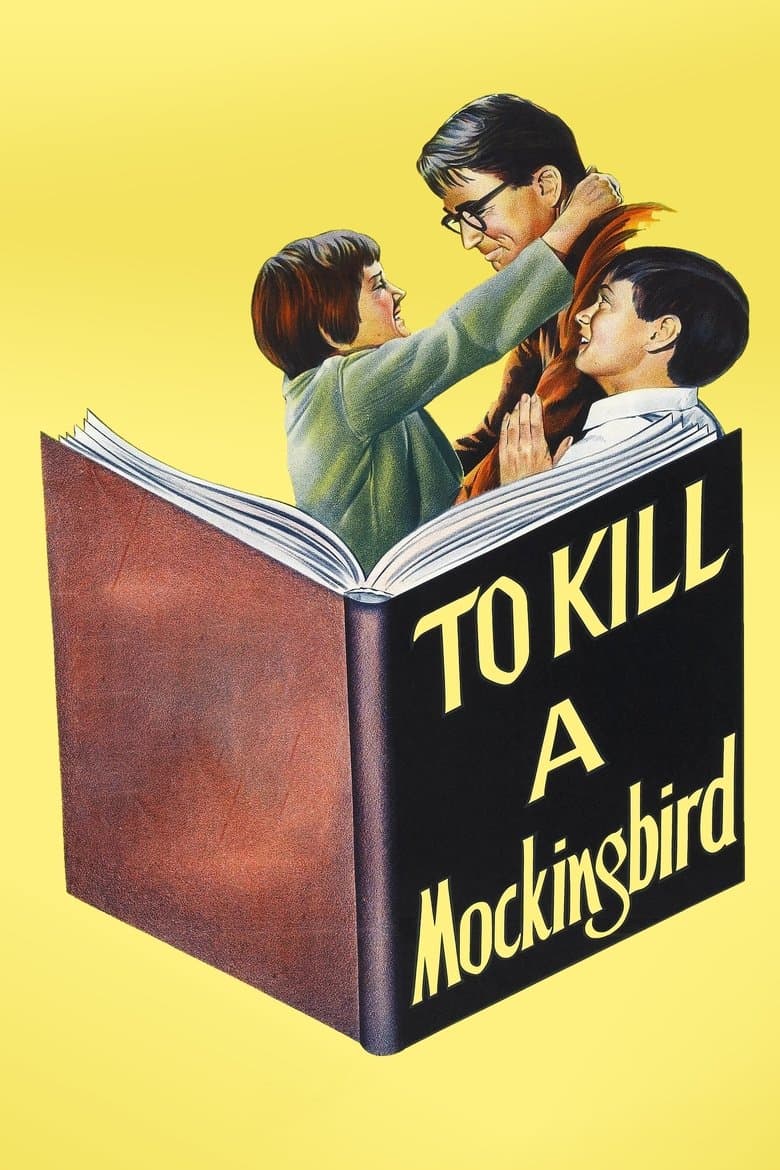
Based on Harper Lee’s Pulitzer Prize–winning novel, To Kill a Mockingbird follows lawyer Atticus Finch as he defends a Black man falsely accused of rape in a small Alabama town during the Great Depression. Seen largely through the eyes of Atticus’s young daughter Scout, the film balances a child’s view of the world with a sobering portrait of racial injustice and moral courage. Gregory Peck’s compassionate, quietly authoritative performance helped make Atticus one of the most admired figures in American cinema. Directed by Robert Mulligan with warmth and restraint, the film blends courtroom drama, coming-of-age storytelling, and social critique into one of Hollywood’s most enduring literary adaptations.
Watch for
- Gregory Peck’s restrained performance, especially the calm moral authority he brings to Atticus in both family scenes and the courtroom.
- How Scout’s perspective shapes the story, softening the film with childhood wonder even as it confronts harsh realities.
- The courtroom sequences, where silence, pauses, and reaction shots carry as much weight as the spoken arguments.
- The contrast between the warmth of home and neighborhood life and the hostility revealed beneath the town’s surface.
Production notes
To Kill a Mockingbird was Robert Mulligan's adaptation of Harper Lee's 1960 Pulitzer Prize-winning novel, with the screenplay by Horton Foote (his fourth feature). Lee herself had been initially skeptical that the novel could be adapted but became a strong defender of Foote's screenplay during production. Gregory Peck played Atticus Finch — a role he campaigned hard to receive and which won him the Academy Award for Best Actor. Mary Badham (10) played Scout, Phillip Alford (13) played Jem, and an uncredited Robert Duvall in his film debut played Boo Radley. The cast also included Brock Peters as Tom Robinson, William Windom as the Mr. Gilmer, James Anderson as Bob Ewell, Ruth White as Mrs. Henry Lafayette Dubose, and a young Estelle Evans as Calpurnia. The film was shot primarily on location in a constructed Alabama town set built specifically for the production. Cinematographer Russell Harlan shot the film. Composer Elmer Bernstein contributed the iconic score. Production cost approximately $2 million.
Trivia
- Gregory Peck reportedly campaigned hard to receive the role of Atticus Finch and considered it the role of his career; Peck won the Academy Award for Best Actor for the performance, defeating Peter O'Toole (Lawrence of Arabia) and Marcello Mastroianni (Divorce, Italian Style) in what is regularly cited as one of the greatest competitive years in Oscar history.
- Robert Duvall's film debut was as Boo Radley — uncredited, with no spoken dialogue but one famously affecting close-up scene at the film's conclusion; the performance launched his subsequent five-decade career, and his pale, otherworldly appearance was achieved through a deliberately gaunt makeup and lighting approach.
- Harper Lee herself was initially skeptical that her novel could be adapted but became a strong defender of Horton Foote's screenplay; Lee remained close friends with Gregory Peck for decades after the film's release and named him godfather to his sons in spirit.
- The famous courtroom sequence — particularly Atticus's closing argument and the subsequent verdict — was praised by actual lawyers and law-school faculty for its accurate depiction of southern courtroom dynamics; the American Film Institute named Atticus Finch the greatest screen hero of all time in 2003.
- To Kill a Mockingbird won three Academy Awards — Best Actor (Peck), Best Adapted Screenplay (Foote), and Best Art Direction; it received eight total nominations including Best Picture, losing to Lawrence of Arabia in one of the more lopsided years of the early 1960s Oscar contests.
Legacy
To Kill a Mockingbird is one of the most beloved films in American cinema and has occupied a permanent position in the American educational curriculum, regularly screened in middle and high schools across the country alongside the source novel. It won three Academy Awards including Best Actor for Gregory Peck. It was selected for the National Film Registry in 1995. The American Film Institute named Atticus Finch the greatest screen hero of all time in 2003 — a designation that captures the film's cultural reach. The 2015 publication of Harper Lee's earlier draft Go Set a Watchman, which depicted Atticus as racially conservative in his older years, reignited public conversations about the moral complexity of the original novel and film. The 2018 Aaron Sorkin stage adaptation, starring Jeff Daniels, brought the story to a new generation through Broadway. Among American films about Southern life, racial injustice, and childhood — three intersecting themes — To Kill a Mockingbird remains the canonical text. Gregory Peck's Atticus Finch endures as one of the most enduringly admired moral protagonists in American cinema.